
 Image 1 of 1
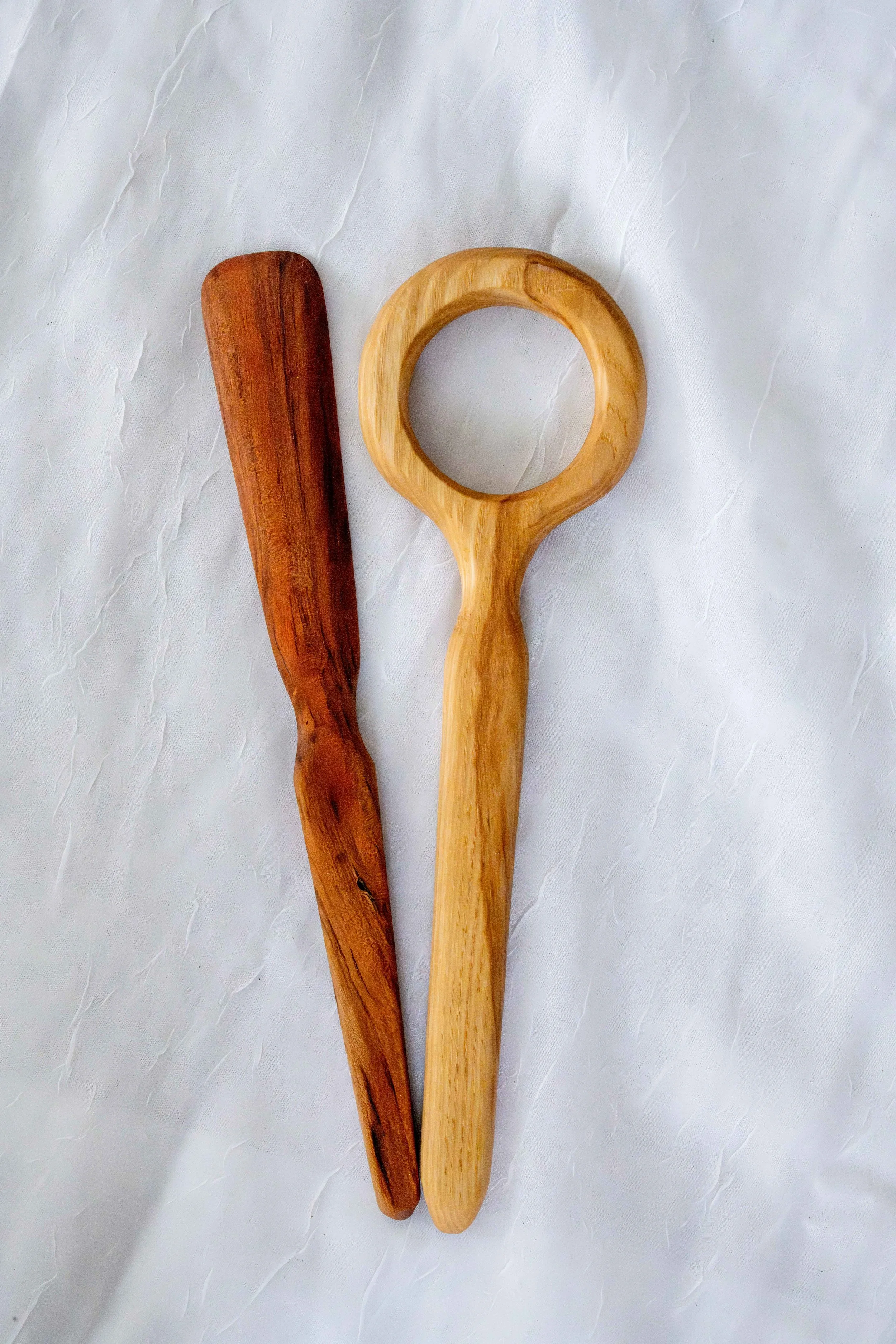
You get an old-time sourdough spurtle and a wooden dough whisk.
Both are simple, durable tools that feel right at home in a sourdough baker’s hands.
Sourdough spurtle: A tapered wooden stick, slightly rounded at the tip, designed for stirring thick batter and dough without tearing gluten strands. It’s great for mixing starter, folding dough in the bowl, or gently incorporating add-ins. The narrow shape lets you reach the bottom of jars and bowls easily, and the smooth wood won’t chill the dough.
Wooden dough whisk: A stout handle with a looped or coil-like wooden frame, made to cut through sticky dough and mix flour and water efficiently. It combines the cutting action of a paddle with the aeration of a whisk, so you can hydrate flour evenly with minimal effort and leave less flour unmixed on the sides.
Care and use:
Hand wash with warm water and mild soap; avoid soaking to prevent splitting or warping.
Dry thoroughly, standing upright or on a rack.
Occasionally rub with food-grade mineral oil or beeswax-based conditioner to keep the wood from drying out.
Don’t use in dishwasher or leave to steep in hot water.
Why they matter:
Preserve dough structure: Both tools mix without overworking gluten.
Less sticky cleanup: The whisk especially keeps dough from clinging to the tool.
Longevity: Well-made wooden utensils can last decades and improve with care.
Tactile connection: They bring a traditional, hands-on feel to sourdough baking.
Simple uses to try:
Stir starter for feeding with the spurtle.
Mix autolyse and initial dough with the dough whisk to hydrate all flour quickly.
Use the spurtle for gentle folds during bulk fermentation.
Scrape and shape loaf edges with the spurtle when transferring to proofing baskets.
You’ve got classic, practical tools that suit slow, mindful baking—built to work with sourdough rather than against it.
You get an old-time sourdough spurtle and a wooden dough whisk.
Both are simple, durable tools that feel right at home in a sourdough baker’s hands.
Sourdough spurtle: A tapered wooden stick, slightly rounded at the tip, designed for stirring thick batter and dough without tearing gluten strands. It’s great for mixing starter, folding dough in the bowl, or gently incorporating add-ins. The narrow shape lets you reach the bottom of jars and bowls easily, and the smooth wood won’t chill the dough.
Wooden dough whisk: A stout handle with a looped or coil-like wooden frame, made to cut through sticky dough and mix flour and water efficiently. It combines the cutting action of a paddle with the aeration of a whisk, so you can hydrate flour evenly with minimal effort and leave less flour unmixed on the sides.
Care and use:
Hand wash with warm water and mild soap; avoid soaking to prevent splitting or warping.
Dry thoroughly, standing upright or on a rack.
Occasionally rub with food-grade mineral oil or beeswax-based conditioner to keep the wood from drying out.
Don’t use in dishwasher or leave to steep in hot water.
Why they matter:
Preserve dough structure: Both tools mix without overworking gluten.
Less sticky cleanup: The whisk especially keeps dough from clinging to the tool.
Longevity: Well-made wooden utensils can last decades and improve with care.
Tactile connection: They bring a traditional, hands-on feel to sourdough baking.
Simple uses to try:
Stir starter for feeding with the spurtle.
Mix autolyse and initial dough with the dough whisk to hydrate all flour quickly.
Use the spurtle for gentle folds during bulk fermentation.
Scrape and shape loaf edges with the spurtle when transferring to proofing baskets.
You’ve got classic, practical tools that suit slow, mindful baking—built to work with sourdough rather than against it.